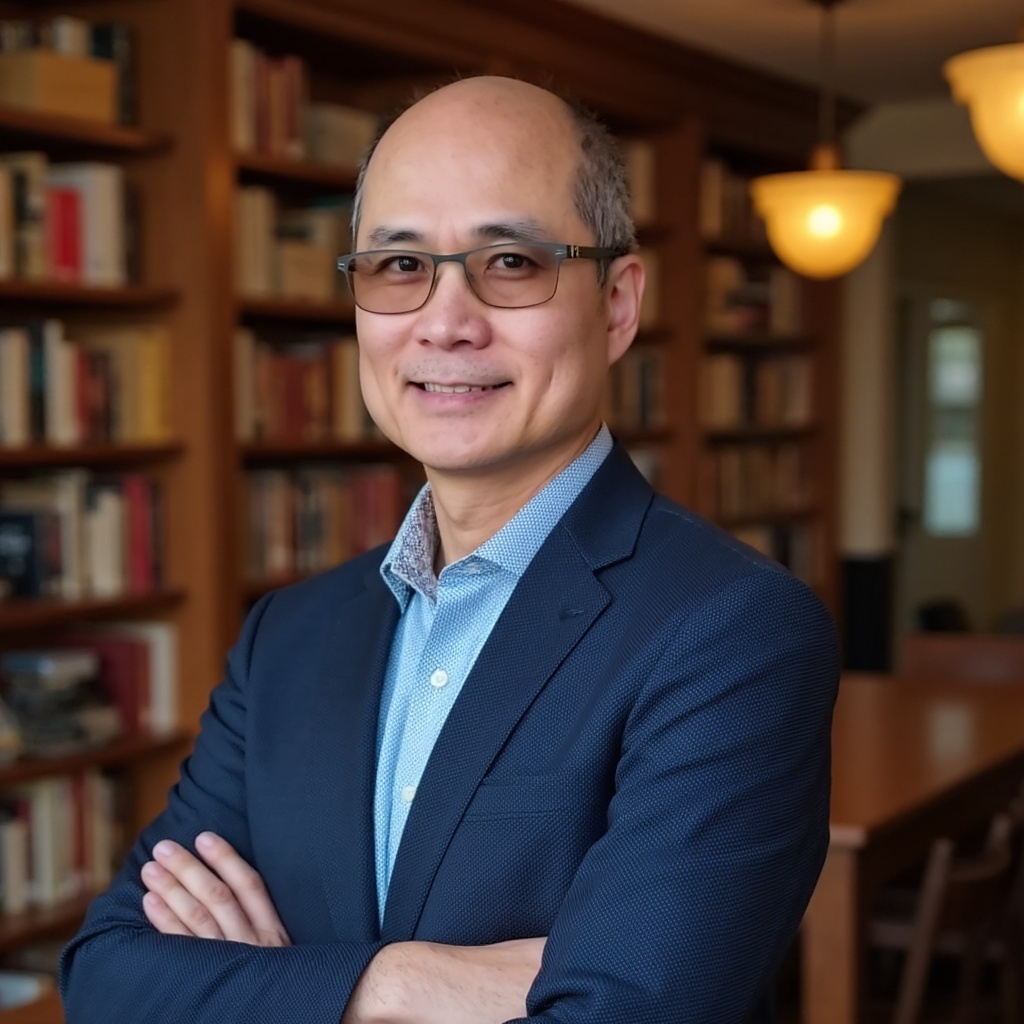
Taimoor H. Qazi, PhD
Assistant Professor
Weldon School of Biomedical Engineering, Purdue University
Date: Friday, Oct. 2
Time: 1:30–2:20 p.m.
Location: SCOB 228
Faculty host: Madeline Andrews
Abstract
Traumatic injury to skeletal muscle causes aberrant fibrosis and a decline in function that can compromise quality of life and prolong disability if left untreated. A major challenge in regenerating complex tissues after severe injury lies in restoring endogenous wound healing processes. This includes not just the cellular players but also the extracellular microenvironment. For example, the core muscle matrisome consisting of interstitial matrix and basement membrane proteins that provide cell-instructive signals during wound healing undergo intricate self-assembly and organization during regeneration. We have found that this process occurs smoothly during re-generation but goes awry during fibrotic degeneration. My group is interested in understanding the spatiotemporal changes in the composition and assembly of the skeletal muscle ECM that distinguishes self-healing from non-healing muscle injuries, and in developing advanced bio-materials to aid in endogenous muscle regeneration.
In my talk, I will present exciting progress spanning both of these aspects. First, I will describe our efforts to characterize features of the regenerative and degenerative muscle ECM in mouse models of volumetric muscle loss and discuss the architectural and compositional changes that accompany diverse wound healing outcomes. Next, I will present our work in engineering injectable and microporous granular hydrogels with tunable properties as scaffolds to guide endogenous muscle regeneration. In recent work, we have synthesized photocurable hydrogels with tunable degradation kinetics that can be used for the modular fabrication of dynamic biomaterials that mirror and thus accommodate the dynamic ECM changes during wound healing and muscle regeneration. Together, these selected highlights represent our approach of understanding biological mechanisms to develop biomaterial-based regenerative therapies.
Biosketch
Taimoor H. Qazi is an assistant professor at the Weldon School of Biomedical Engineering at Purdue University. His research group leverages biomaterials for fundamental and applied research in wound healing, using mouse skeletal muscle as a model tissue to decipher changes in the extracellular matrix that instruct successful regeneration and identify characteristics of fibrotic degeneration.
Before starting his faculty position, Qazi did postdoctoral research at the University of Pennsylvania from 2019–2022 and the Charité Medical University in Berlin in Germany from 2017–2019, and earned his PhD from the Technical University of Berlin in 2017.
His research program is supported through an R35 Maximizing Investigator’s Research Award from the NIGMS/NIH, a Junior Investigator Award from the Musculoskeletal Transplant Foundation, and an Early Career Faculty Research Award from the Ralph and Grace Showalter Trust. Qazi serves on the Editorial Board of the Journal of Biomedical Materials Research Part A and is the Secretary/Treasurer of the Engineering Cells and Their Microenvironments SIG of the Society for Biomaterials.